Therapy Support Team
Overview
At The Ashley School Academy Trust, The Therapy Support Team:
Adopt a total communication approach throughout school, where pupils have access to their own means of communication throughout the day.
Develop means of communication appropriate to each child’s individual needs.
Create opportunities for communication throughout the curriculum to enable each child to communicate to the best of their ability.
The Speech and Language Therapy Service (S<) provided by Cambridge Community Service (CCS) is concerned with the management of disorders of speech, language, communication and eating / drinking in children. We are a friendly and approachable service for children, parents and staff.
The S< team that provides this service within The Ashley School works closely with school staff, particularly with the Specialist Teaching Assistants for Therapy Support, Emma Wicks, Donna Lister, Paula Duncan and Jessica Tripp who work across all Key Stages and offer both direct and indirect work with children.
The Therapy Support team are able to support all pupils in a therapeutic and holistic way to support attention, communication and regulation to be ready for classroom learning in all areas of the school.
What we do to support communication
Speech and Language Therapy
On entry to school the majority of children are already known to the CCS Speech and Language Services. If a pupil is not known, school staff can refer them. If a child has specific eating and drinking needs, a medical referral is required.
A pupil’s speech language and communication needs are assessed within the school setting using a combination of individual assessments, classroom observations and liaison between staff and family.
When there is an identified need for input from the Speech and Language Therapist, the therapist will either set goals with the support staff or class teacher in order to encourage language development on a daily basis in the class room (or at home) or provide individual or group therapy aimed at developing a particular skill.
We work with children with the following speech, language and communication needs:
language delay
specific language impairment
specific difficulties in producing sounds
hearing impairment
cleft palate
stammering
autism/social interaction difficulties
voice disorders
Occupational Therapy
If a child is known to the Occupational Therapy Team, information will be shared with the team to support goals and recommendations that have been set in the pupils latest report, then classroom recommendations and strategies will be shared with Key Stage staff.
We are unable to refer pupils to the Occupational Therapy service currently, this has to be done through the pupils GP.
We lead a vast number of Sensory Circuits and Sensory Communication groups and sessions that support the pupil’s regulation in order to be ready for learning within the classroom (sensory circuits) and support the understanding of regulation as a strategy when heightened.
Staff are offered support and resources for classroom equipment to support the individual needs of the pupil as recommended by the Occupational Therapist.
We use the School Sports hall, sensory room and other therapy rooms to provide a stimulating and personalised program for our pupils to encourage development of communication and self regulation.
Attention Autism
Attention Autism is an approach used to build attention and develop early communication skills in children and young people with autism and associated communication difficulties. The programme was developed by Gina Davies, a speech and language therapist who leads the ‘Gina Davies Autism Centre’ which is a nationally recognised provider of advice and training. The links below give more information:
Facebook Gina Davies Autism Centre
You Tube Gina Davies Autism Centre
The Attention Autism programme progresses through a series of stages, building on attention skills at each level. Activities are always structured to first capture attention (stage 1- also known as Bucket), then maintain attention (stage 2), then moves into turn-taking (stage 3) and then interactive/independent activities (stage 4).
The approach is used in small group settings to encourage social learning. Attention Autism is messy, colourful, exciting, interesting and innovative and offers an ‘’irresistible invitation to learn’’.
Modified from https://www.middletownautism.com
To support our pupils in school, staff have been trained in the delivery of this approach and the children have a fantastic time learning through this approach.
SmiLE
The Ashley School Academy Trust have been using smiLE Therapy since 2013, with support and guidance from the Suffolk Sensory Team and Teacher of the Deaf and further on with support from ECCH Speech and Language Therapist, the school have made a significant impact on functional skills across the school.
The school use a variety of scenarios to enable relevance to the ever growing complexity of its pupils within the community including;
Playground skills
Playing a game
Entering an office
Requesting and using clarification in a classroom
Shopping
Waiter service
Telephone ordering
The skills have a common theme of appropriateness to use with unfamiliar adults who are unaware of the communication needs of the pupil. The tasks and modules progress so every pupil can transfer previous skills into the next module.
The task is planned, liaising with staff in school or within the local community, so they understand their role within the situation. The baseline task is then recorded and then therapy starts. Once pupils have a growing awareness of the steps, the baseline video is evaluated and in the final week of therapy we return to the scenario where the final video is recorded. The recordings and assessments provide a clear progression of functional communication for every pupil.
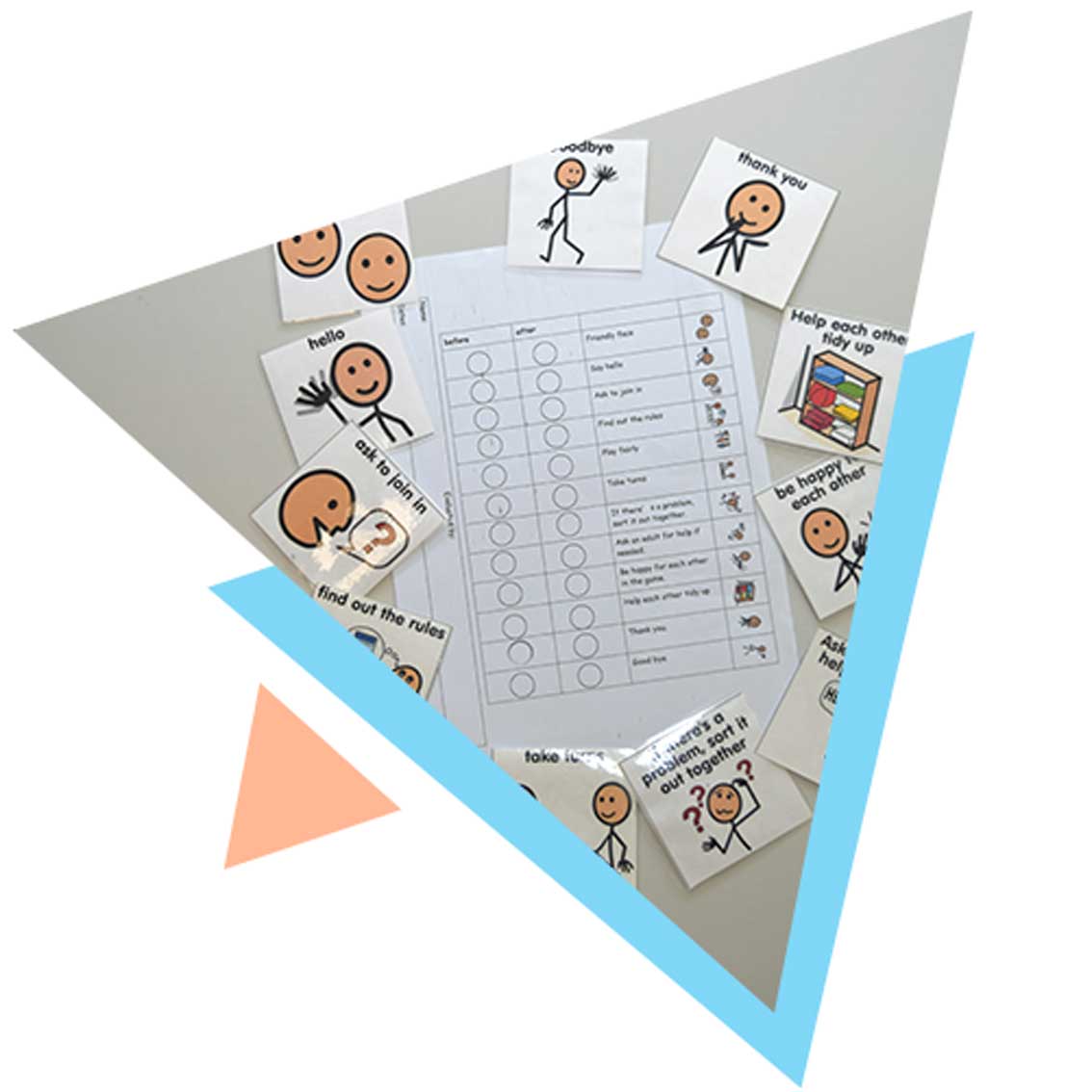
Over the years some modules have been adapted to create a simple visual, prompting clear rules/steps for a certain situation around the school, enabling all pupils to access smiLE strategies.
We believe the structure and strategies used throughout the smiLE approach support the pupils with simple, clear and achievable steps that are measurable, reflective and support peer and self- evaluation.
The face to face interaction in everyday tasks, make this an essential therapy within our school ethos and supporting pupils with communication needs and to support them with life after school.

Blank Language Assessments
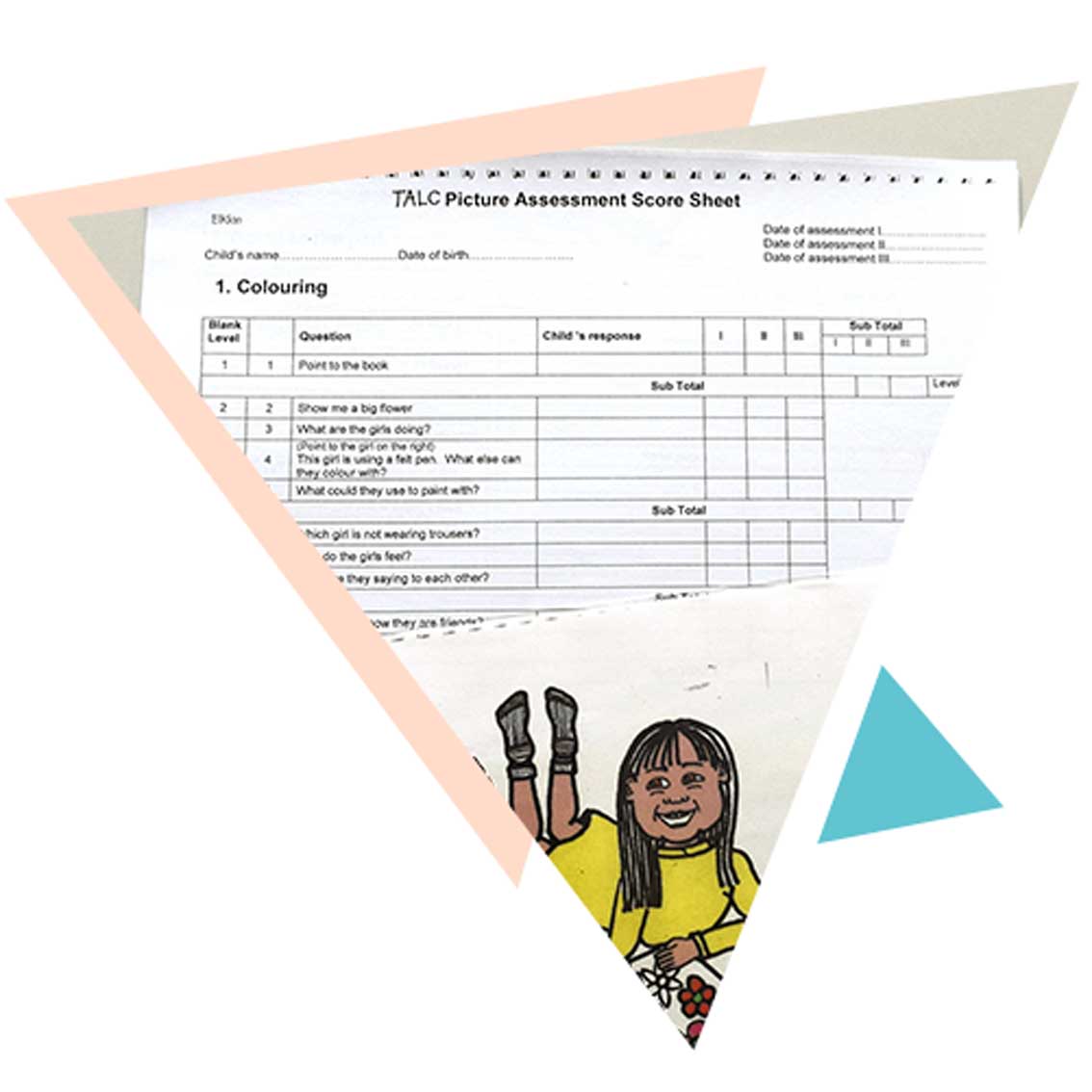
TALC is a Speech and Language Assessment to Test Abstract Language Comprehension.
“The four levels follow a developmental sequence so the model can be used to ascertain the level of abstract language a child can understand. The language used to interact with the child can therefore be modified to ensure that he understands the linguistic demands. This will in turn improve the child’s confidence and encourage the development of abstract verbal reasoning skills within his or her level of ability.” Elks, L and McLachlan, H. (2015) Elklan TALC Test of Abstract Language Comprehension. Cornwall. Elklan
When a pupil is working at Level 1 Questioning, they are able to understand and answer level 1 questions. It is recommended that in lessons Level 1 questions should be asked 80% of the time and Level 2 at 20%. This is continued throughout the 4 levels.
The pupils individual levels are shared across the school to enable the correct level of questioning within the classroom and social times.
How we help
Every child is different, so different types of activities and therapy will be needed for each child. The need for Speech and Language Therapy will vary across time. Some children may only need therapy for a short time, while others may continue to need advice for many years.
Sometimes there will be a need for direct work with the child – we may offer the following support:
Individual therapy sessions
Group therapy sessions targeting specific areas, e.g. sensory communication, social skills, narrative development and understanding and use of language.
Communication within the community, e.g. visits to local shops to practice communication skills.
Indirect work is when the therapist and support assistant will work with the child's teacher or classroom assistant on communication aims. Indirect work also involves:
Meeting with other professionals e.g. Occupational Therapist, Physiotherapist, Paediatrician, Social Workers, and School Nurse.
Meeting carers/parents to offer support and advice
Training carers/parents and other professionals, to help with the child's speech, language and communication development
Contributing to the child's annual review and Statement of Educational Needs.
Referring the child (if necessary) to other professionals e.g. Communication Aid Centre, Specialist feeding clinic etc.
If your child is referred to the S< service the Therapist will assess their communication skills and write a report/goals. If necessary they will review their progress in discussion with school staff and a report will be written for the child’s annual review.
The Team use Earwig Academic to record sessions every half term. Records will include photos and videos (if consent is given) and provides session information. Earwig can be accessed through an App or through your internet browser and is available to staff and parents/carers.
Communication methods in school
At The Ashley School we adopt a “total communication” approach using a range of alternative communication methods to support and encourage speech, language and communication development. This includes the informal methods of facial expression, body language, gesture and vocalisation, together with formal communicative methods of words, signs, symbols and electronically aided speech. Pupils are encouraged to use whatever system they feel is most effective for each given situation.

Signing Systems
The use of signing alongside speech is proven to develop a pupil’s understanding of language and their ability to express themselves when a child has language or learning difficulties. The use of signing systems, such as Makaton are used throughout the school by staff and this greatly enhances a child’s ability to be an effective communicator. Key members of staff support the children in developing this form of communication to build up their knowledge throughout the key stages.
Symbols and Visual Timetables
The use of symbols provides a valuable support and is encouraged. It is the responsibility of class staff to provide symbol vocabulary as appropriate. Classes use a visual timetable to support their transitions during the day. Some individual pupils may need a personal daily timetable.